
Wilhelm Wagenfeld
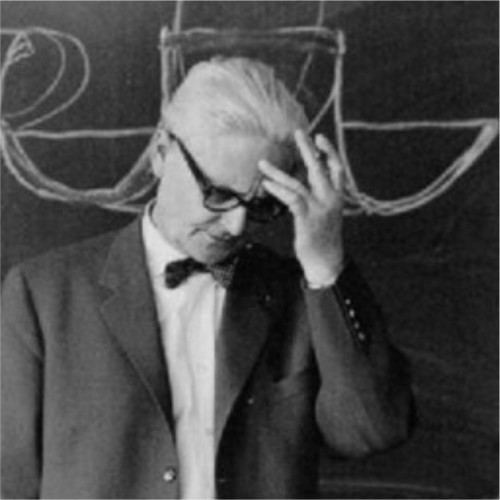
Wilhelm Wagenfeld (1900–1990) was a pioneer of German industrial design and a core representative designer of the Bauhaus. He was famous for minimalist and functional daily necessities made of glass and metal, known as the Father of the Bauhaus Table Lamp.
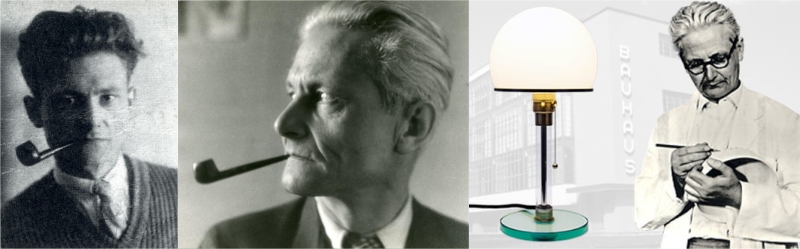
Basic Information
- Life Span: April 15, 1900 (Bremen, Germany) – May 28, 1990 (Stuttgart, Germany)
- Identity: Industrial designer, silversmith and design educator; a key member of the Weimar Bauhaus period.
- Design Style: Functional minimalism. Adhering to the principle of form follows function, his works feature geometric shapes, no redundant decoration, and are perfectly suitable for industrial mass production.
Life Profile
-
Early Education (1914–1922)Apprenticed in industrial drawing at a Bremen silverware factory and studied at the Bremen School of Applied Arts. Later furthered his studies at the Hanau Academy of Painting, majoring in silversmith craft and becoming a professional silversmith.
-
Bauhaus Period (1923–1925)Enrolled in the Weimar Bauhaus in 1923, studying under László Moholy-Nagy and joining the Metal Workshop. In 1924, he co-designed the iconic WG24 Table Lamp with Carl Jacob Jucker, which became one of the most classic Bauhaus lighting works. He stayed in Weimar for independent creation instead of moving with the Bauhaus to Dessau in 1925.
-
Independent Design & Teaching (1926–1990)Designed glassware, tableware and lamps for renowned brands including Schott Glass, Rosenthal and WMF. His Kubus Square Tableware (1938) is another timeless classic.He was conscripted during World War II and later detained as a prisoner of war by the Soviet army, returning to the design industry after the war. He settled in Stuttgart in 1954, founded his own studio, and kept designing until the late 1970s.He received numerous honors such as the Grand Prize of the Milan Triennale and the German Good Design Award. He passed away in Stuttgart in 1990 at the age of 90.
Design Philosophy & Influence
- Core Concept: Democratization of Daily Goods — good design should be simple, durable, affordable and serve the general public.
- Stylistic Features: Geometric outlines, opaque & transparent glass, nickel/chrome-plated metal components, no superfluous ornamentation, creating soft and diffused light.
- Historical Status: One of the most successful practitioners of Bauhaus functionalism. His works are still in mass production today, profoundly influencing modern lighting, glassware and tableware design.
Representative Works
- WG24 Table Lamp (1924): A symbolic Bauhaus piece with opal glass lampshade, nickel-plated pole and clear glass base.
- Kubus Square Tableware (1938): Stackable glass and ceramic tableware with minimalist storage design, a modern kitchen classic.
- WG27 Floor Lamp (1927): Extended design with the same aesthetic, featuring soft ambient light for modern interior spaces。
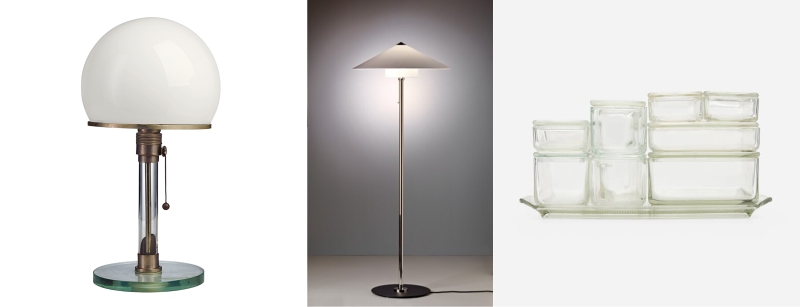
-500x500.jpg "Wagenfeld WG 24 Table Lamp")
Wagenfeld WG 24 Table Lamp
Designer: Wilhelm Wagenfeld设计师:威廉·瓦根费尔德 Year: 1924 (Bauhaus Metal Workshop, Weimar)年份:1924年(包豪斯金属..